Subversion-1: Inside ISI’s Most Dangerous Sleeper Cell Unit Targeting India
Subversion-1 serves as ISI’s internal mechanism for cultivating sleeper networks beneath civilian cover. Its operatives undergo specialised training in surveillance, covert movement and secure communication. Funding flows through illicit channels, shielded from direct state attribution. This unit has shaped Pakistan’s most enduring form of low-visibility aggression.
Pratik Saxena
11/23/20252 min read
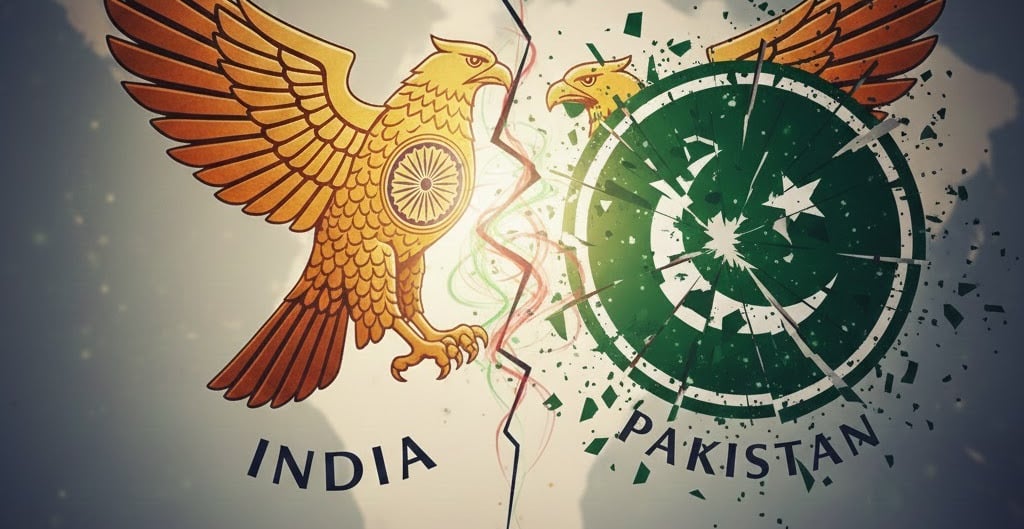
Subversion-1 — often referred to as S1 — is known within intelligence circles as one of the most secretive divisions of Pakistan’s Inter-Services Intelligence. Unlike visible military formations or border infiltration groups, this unit operates in silence. Its purpose is not to fight a conventional battle, but to weaken India through covert networks, sleeper cells and long-term destabilisation.
This is the shadow frontline of Pakistan’s proxy strategy — a strategy built precisely because Pakistan understands that it cannot challenge India in a conventional, state-to-state war.
For decades, military analysts across the world have acknowledged a simple truth: India’s economic strength, military capability and conventional superiority make open conflict with Pakistan strategically suicidal. In response, Pakistan’s establishment has leaned on asymmetric methods — operations that operate below the threshold of war, shielded by deniability.
This is where Subversion-1 becomes central.
Instead of direct combat, it focuses on proxy violence, often targeting civilians, soft zones and urban environments where the impact is high and attribution is blurred.
S1 is believed to operate from Islamabad under the supervision of a senior Pakistani Army Colonel, with ground coordination reportedly handled by two ISI officers, identified in intelligence reports as Gazi-1 and Gazi-2. The unit is designed to build sleeper-cell architecture: individuals planted inside India who live ordinary lives, work regular jobs, and remain dormant for years. Only when instructed do they activate — passing information, scouting targets, providing logistics, or facilitating larger terror modules.
Recruits handled by S1 undergo specialised training that includes covert surveillance, secure communication, IED-making skills, infiltration techniques and operational masking. What makes the threat sharper today is the shift in the profile of operatives. S1 increasingly taps into educated, urban, tech-savvy individuals — people who can blend effortlessly into society while carrying out tasks with precision.
Funding for Subversion-1 flows through deniable channels. Drug-trafficking, hawala networks, fake charities and unregulated remittances form the financial backbone. This ensures that Pakistan’s state institutions can distance themselves publicly while the machinery continues to function.
The hallmark of S1 is patience. Cells are built slowly, quietly and systematically. Some are activated within months; others may lie untouched for several years. India’s security agencies — RAW, NIA, IB, ATS units and cyber intelligence teams — have disrupted multiple S1-linked networks, but the challenge persists. Every dismantled module reveals another layer beneath it.
Subversion-1 represents Pakistan’s long-running strategy of fighting a war it cannot win openly. It relies not on armies, but on invisibility; not on battles, but on infiltration. And in doing so, it exposes the harsh reality of Pakistan’s proxy doctrine — a model that avoids conventional confrontation by pushing the burden onto civilians through sleeper cells and covert handlers.
Pakistan avoids the war it cannot win — and wages the one it thinks India won’t see.