Russia Offers Su-57 to India: A Fighter Jet, A Message, and A Geopolitical Signal
Russia has renewed its offer to supply the Su-57 fifth-generation stealth fighter to India, signalling Moscow’s intent to remain a key player in India’s air-power modernisation. This post examines the strategic timing of the offer, India’s considerations, and how the Su-57 fits into New Delhi’s evolving defence priorities.
Pratik Saxena
11/20/20252 min read
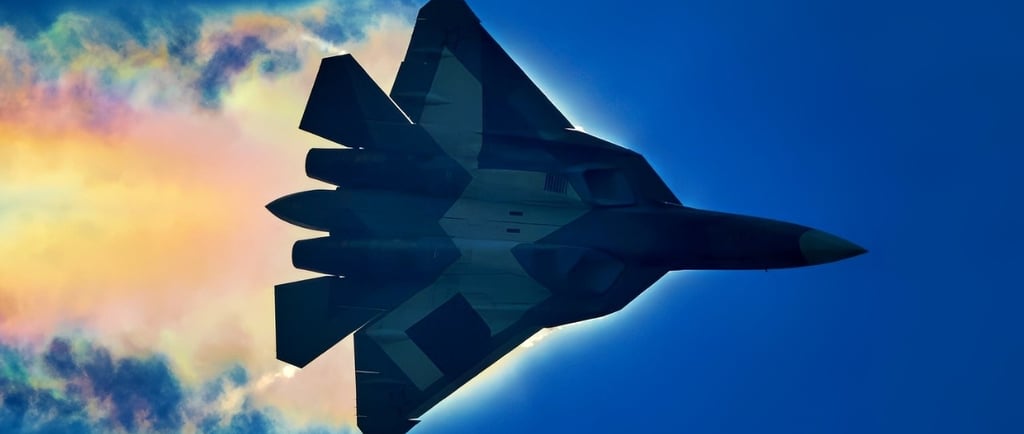
Russia has once again placed the Su-57, its fifth-generation stealth fighter, on India’s table. The timing is deliberate, the message is strategic, and the offer carries geopolitical weight. At a moment when India’s defence partnerships are shifting and global alignments are being redefined, Moscow wants to remind New Delhi that it still has something significant to offer: a frontline stealth jet that Russia believes can compete with the world’s best.
Whether India sees it the same way is an entirely different question.
Russia’s Intent: Keeping India in Its Strategic Orbit
The Su-57 offer is not just about aircraft. It is about influence. For decades, Russia has been a primary supplier of India’s combat aircraft, from MiG-21s and MiG-29s to the Su-30MKI. But the landscape is changing. India is deepening defence ties with the United States, France, and other Western partners. Its procurement philosophy is shifting toward diversification and indigenous capability.
Russia understands this shift. The Su-57 offer is a reminder of Moscow’s technological relevance and a signal that it does not want to be sidelined in India’s next-generation air combat planning. For Russia, losing India in the aviation sector would be a long-term strategic setback, and the Su-57 is its most powerful bargaining chip.
India’s Evaluation: Interested, But Not Convinced
For India, the Su-57 is an aircraft worth examining, but not one it is ready to commit to. On paper, the fighter offers strong attributes: stealth shaping, advanced avionics, supermaneuverability, and compatibility with a wide range of weapon systems. Yet India’s concerns lie beyond specifications.
The Su-57 fleet inside Russia is still small, raising questions about production scale and long-term maintenance certainty. The war-time pressure on Russia’s defence industry adds further unpredictability. India cannot afford delays or supply-chain vulnerabilities, especially in a platform as critical as a fifth-generation fighter.
There is also the broader strategic environment. India’s partnership with the United States is growing rapidly, particularly in areas like engine development, drone technology, and jet design. Any major financial commitment to the Su-57 could complicate these relationships.
India’s Priorities: Indigenous First, Diversified Always
New Delhi’s focus is increasingly clear. India is advancing the Tejas Mk2, upgrading its Sukhoi fleet, and accelerating the development of the AMCA, its own fifth-generation fighter. Indigenous capability is no longer a distant dream; it is a strategic priority backed by timelines and budgets.
At the same time, India values a diversified defence portfolio. It works with Russia, the U.S., France, Israel, and Europe — not out of compulsion, but by design. This ensures that India never becomes dependent on any single supplier. In such a framework, the Su-57 becomes a proposal India will examine carefully, but evaluate purely through operational and technical lenses, not sentiment.
The Bigger Picture: A Tactical Offer, Not a Strategic Shift
Russia’s renewed offer of the Su-57 reflects its desire to remain an indispensable partner for India’s air power growth. But India’s decision-making is driven by capability, timelines, reliability, and long-term value. The Su-57 may be impressive on paper, but India’s next-generation choices will be guided by a future where indigenous development and multi-nation partnerships form the backbone of its air combat doctrine.
For now, the offer is on the table. India will study it. But the final decision will be made on India’s terms, not Moscow’s urgency.